Cap'n Games, Inc.
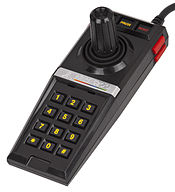
5200-A: CONTROLLER - MODEL CX-52
5200-A: CONTROLLER - MODEL CX-52
Variant Definitions
Variant Definitions
Key: Variant Title = Description of Expected Goods
GAME ONLY = It's the Game Disc/Cart Only
GAME WITH BOX/INSERT = Game Disc/Cart with original Box Artwork Insert, correct color case (may be replacement).
GAME WITH BOOK/BOX/INSERT = Game Disc/Cart with Original Instruction Manual and Artwork Insert, correct color case (may be replacement)
GAME BOX/INSERT ONLY = Just The Artwork - NO Game (you should have it and need the artwork insert for it).
GAME BOOK/MANUAL ONLY = Same, just the original manual the manufacturer put in there.
BRAND NEW SEALED = We strive to notify you of any rips or tears in cellophane wrapping. If perfection is wanted, PLEASE call us before hitting order.
Please assume all items have a company price sticker affixed to each item. We use "removable" stickers and avoid stickering cardboard.
No Used Items will arrive with other inserts (supplied maps, warranty cards, posters, stickers, plastic wrap, cardboard or foam inserts) - some do, but don't plan on it since many people threw things away back then.
Brand New Sealed items have manufacturers warranty which are applied first, as applicable (esp. Atari).
Not stocked? Choose the Out of Stock Variant, Scroll and Click Notify Me! The system will email you when restocked automatically! :)
Couldn't load pickup availability
The controller prototypes used in the electrical development lab employed a yoke and gimbal mechanism that came from an RC airplane controller kit. The design of the analog joystick, which used a weak rubber boot rather than springs to provide centering, proved to be ungainly and unreliable. They quickly became the Achilles heel of the system because of their combination of an overly complex mechanical design with a very low-cost internal flex circuit system. Another major flaw of the controllers was that the design did not translate into a linear acceleration from the center through the arc of the stick travel. The controllers did, however, include a pause button, a unique feature at the time.
Games were shipped with plastic card overlays that snapped in over the keypad. The card would indicate which game functions, such as changing the view or vehicle speed, were assigned to each key.
Share with those who care about the Love of Retro!